
Health experts in the North East are leading the country in the development of innovative training methods using digital technology, the latest package involving a zombie apocalypse.
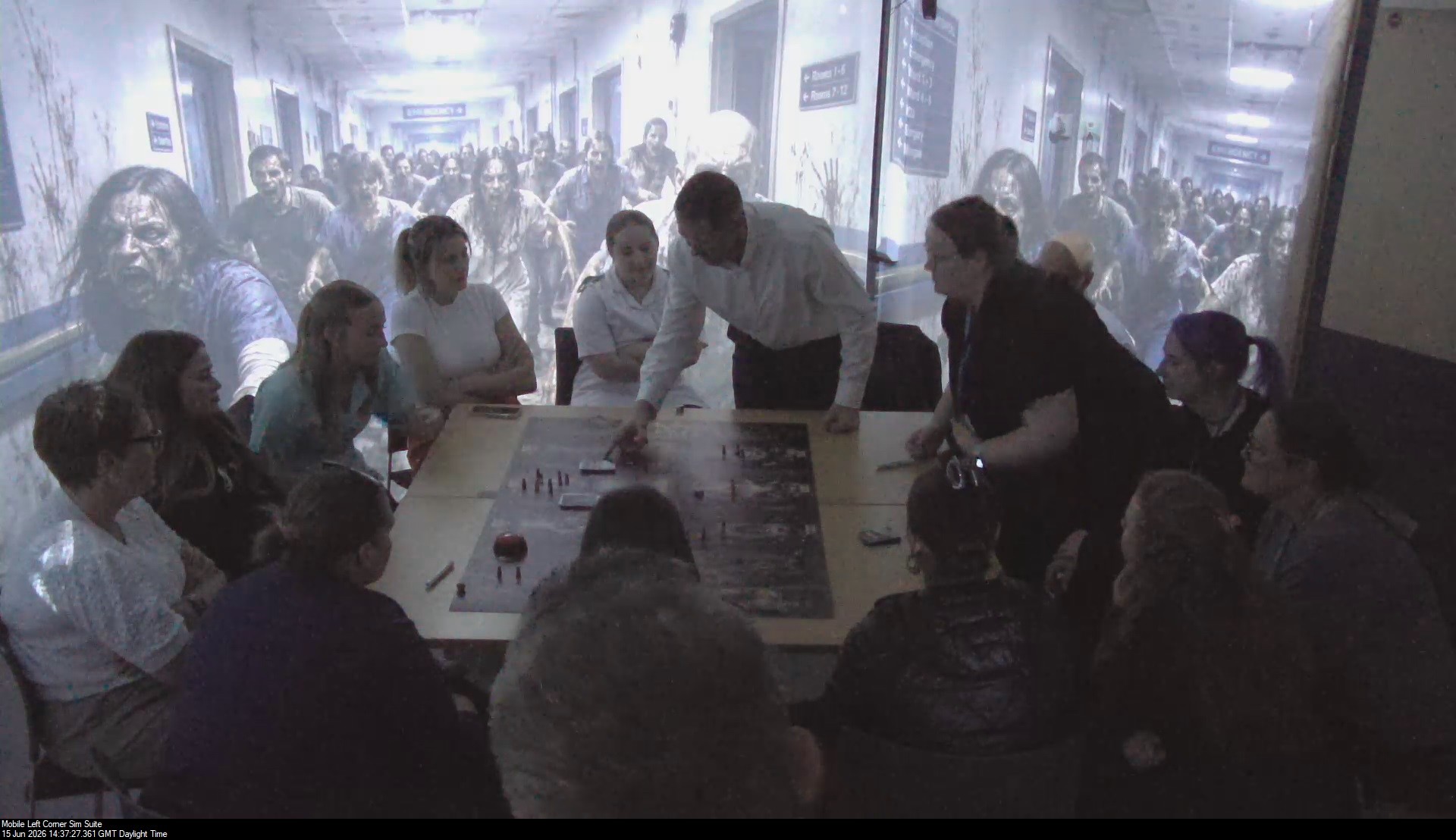
Staff undergoing simulation training are being asked to play Last Light, a post nuclear accident board game set in an immersive theatre where they come under attack from zombies.
The new way of training is a measured response to society’s fixation with scrolling on digital devices which is believed to be altering the way people think.
Research has shown that relying on traditional methods of training – lectures, seminars and presentations – is less likely to hit home as recipients struggle to concentrate.
So, County Durham and Darlington NHS Foundation Trust’s Clinical Simulation Centre, based in Bishop Auckland Hospital, has come up with a more engaging and effective way to train.
Last Light provides a post-apocalyptic zombie-fest that leaves clinicians with a seminal memory that will last.
In the immersive room, staff are exposed to the charred remains of a once proud hospital, a receptionist warning by video link of what is to come after a local powerplant goes nuclear.
But the screen goes blank as many of the dead start coming back to life as flesh eating zombies and the scenario becomes the survival of the human race.
Staff make decisions based on dice and playing cards which change the course of the contest, creating a sense of stress in combatants that is mirrored in the workplace.
The training is run by Senior Nurse Teaching Fellow and Clinical Simulation Centre manager John Lewandowski; Simulation Technician Blake Tinkler, Games Master and Simulation and Immersive Technologist Craig Dores, Clinical Teaching Fellow and game lead Dr Sarah Alvi, and Consultant Anaesthetist and Clinical Simulation Lead Dr Derek Randles, and supported by a wide variety of simulation faculty, including Dr Oliver Moore, A&E Consultant and Regional Simulation Lead for ACCS training.
John said: “We are in a TikTok era where we have to recognise how people consume information and learning has changed.
“We did a maternity board game at a conference, and it was fun and engaging. We thought we could do something better than just face to face simulations, something incorporating everything we have seen over the past few years.”
A groundbreaking approach to NHS training
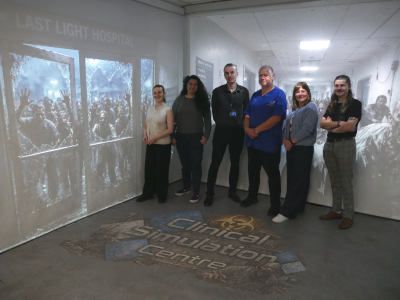
Last Light Training Team
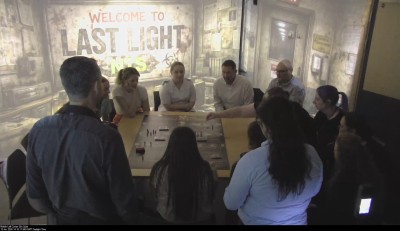
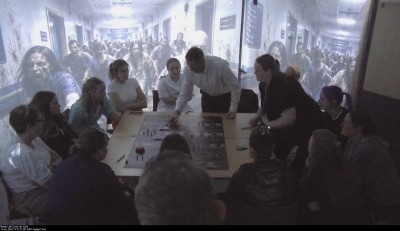
CDDFT has been leading the way in the North and nationally on how virtual reality is used. The team has developed more than 30 different scenarios.
John said: “By creating with AI a post-nuclear zombie apocalypse, inside a ruined hospital, with sound effects, we wanted to make sure that people were learning without realising.”
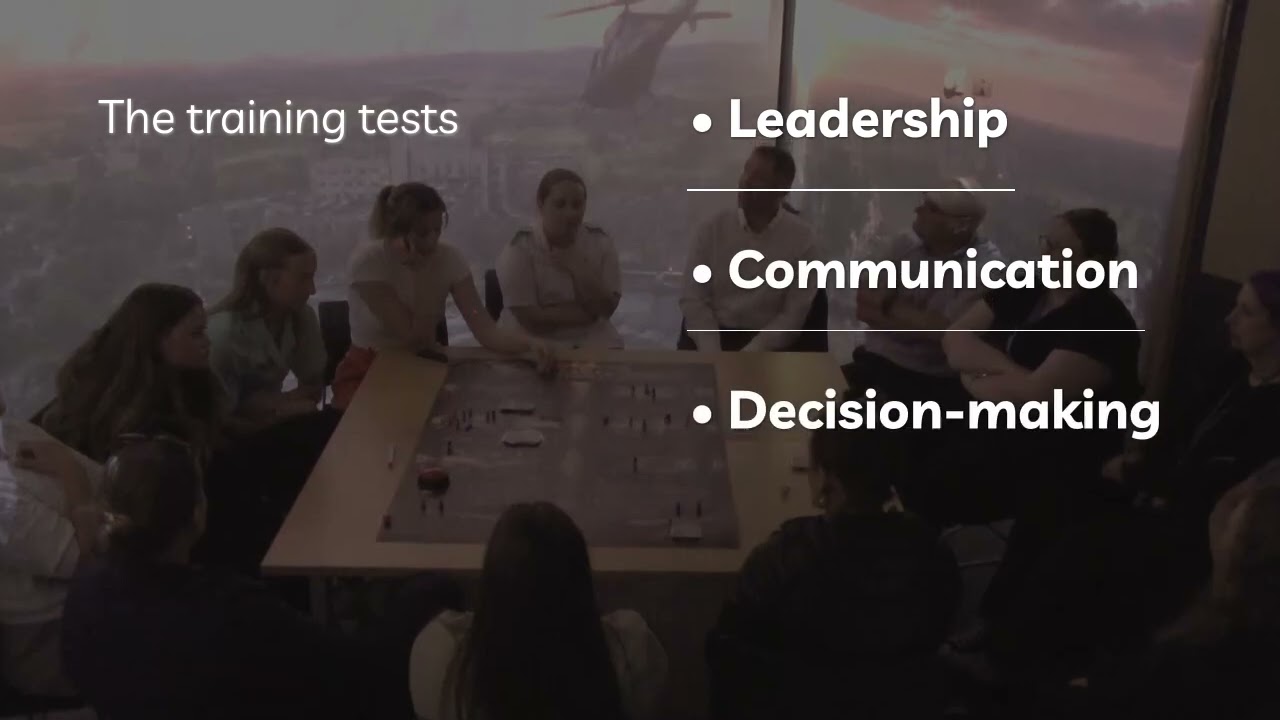
The game has several phases which identify and challenge leadership, involve cognitive overload, situational awareness, "silence protocol" and communications. Each phase presents them with new challenges and there is a games master who controls the dynamics of the play. At the end of each phase staff are asked how they feel and how the training relates to good hospital practice.
John said: “You can see how staff react and bounce off each other. You can see how the group starts communicating. It makes them think. It’s a mass casualty event with deaths, blast injuries, burns, an unknown contaminant and trauma which requires triage and with this approach they will remember a lot more than with traditional training methods.”
Feedback is already hailing the training sessions a success.
John added: “The first week of trials went really, well and we are thinking of opening it up to trainee and newly qualified nurses. The important thing is how everyone is debriefed at the end of it and there is plenty of scope to use the game in other innovative ways. It isn’t just about fun; it’s for the learning as well which comes out in a careful debrief that helps them relate to how their experiences impact on the ward.”
Blake Tinkler’s work around simulated patient records has been shortlisted for a National Award at The National Simulation Technician Awards at the SimTech Symposium in Manchester, 2026.
Game lead Dr Sarah Alvi added: “My job is to ensure the learning has been embedded in the fun. I have to observe their behaviour and during the debrief ensure they appreciate the serious side of the game and how it is relevant to good practice. They always want to play more which you don’t get from traditional training.”