Clinical researchers at County Durham and Darlington NHS Foundation Trust are working with researchers at Imperial College London on two research studies that aim to detect cancers using a simple breath test.
The two breath test studies currently running at the Trust are VAPOR2 and PANACEA, which aim to detect gastrointestinal cancers, including cancers of the liver, oesophagus (food pipe), stomach, pancreas and bowel.
The test is based on detecting compounds present in breath, known as volatile organic compounds. Research has shown that patients with cancer produce different types of these compounds compared with individuals who do not have cancer.
Gastrointestinal cancers can be difficult to diagnose early, as patients often experience vague symptoms that can be mistaken for less serious conditions. This can make it difficult for healthcare professionals to know which patients should be referred to hospital for further investigations.
If successful, the breath test could one day be used in GP surgeries or pharmacies to help identify which patients require further tests in hospital, leading to earlier diagnoses and better outcomes for cancer patients.
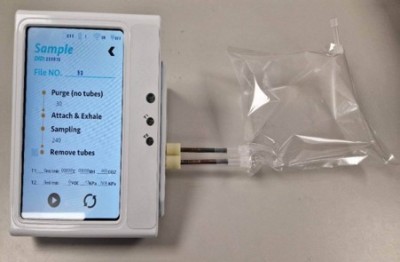
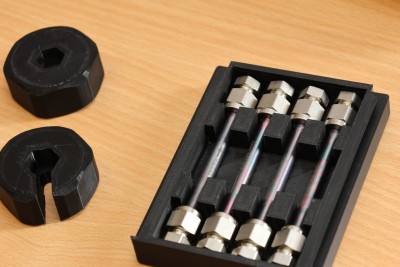
Patients referred to County Durham and Darlington NHS Foundation Trust for further investigations may be invited to take part in the studies by the Research and Innovation team. Participation involves breathing into a sampling bag, which can take as little as 30 seconds. The sample is then collected onto specialised tubes using a bespoke pump and sent to Imperial College London for analysis.
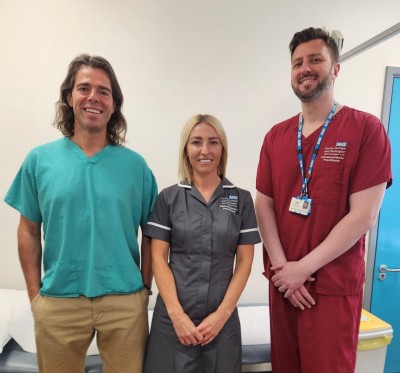
The research at the Trust is being led by Dr Porras Perez, alongside Clinical Endoscopist Matthew Johnston and Research Practitioner Michelle Tindall.
Michelle said that, if the studies are successful, they could make a significant difference for patients in the future.
“Cancer affects so many people, of all ages, directly or indirectly. It’s inspiring to see patients volunteering to take part, as they know it could make a real difference to diagnosis and care in the future. That’s why research is so important – we’re really excited about what this could achieve.”
Steve Russell, Chief Executive at County Durham and Darlington NHS Foundation Trust, said:
“We are proud to be working in partnership with leading organisations on research that has the potential to transform how we diagnose cancer in the future.
“Studies such as PANACEA and VAPOR2 demonstrate how collaboration can help develop new tools and approaches that could support earlier diagnosis, improve outcomes and enhance patient care for generations to come. We are grateful to the patients who choose to take part in this important research and help shape the future of healthcare.”
VAPOR2, funded by the charity Pancreatic Cancer UK, focuses on pancreatic cancer, known as a ‘hidden killer’ because symptoms are vague, associated with common, less serious conditions and typically appear when the disease is at an advanced stage. Currently, 80% of patients with pancreatic cancer are diagnosed too late for potentially life-saving treatment. The disease is the fifth leading cause of cancer death in the UK, with a five-year survival rate of just 7%.
The PANACEA study, funded by the National Institute for Health and Care Research (NIHR) in collaboration with the Office for Life Sciences, is validating a breath test for multiple gastrointestinal cancers, including oesophageal, stomach, liver, bowel and pancreatic cancers. Together, these cancers affect over 75,000 people in the UK each year and account for more than 44,000 deaths.
The PANACEA study is expected to run until December 2026, while VAPOR2 is expected to run until 2028. Both trials are being led nationally by Professor George Hanna at Imperial College London.