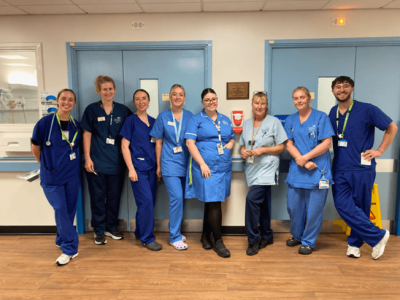
This World Stroke Day, Thursday 29 October, County Durham and Darlington NHS Foundation Trust (CDDFT) is encouraging people across our communities to learn how to recognise the signs of a stroke and understand why acting quickly can make a vital difference.
Treatments for stroke continue to advance, meaning more patients may be able to benefit from life-changing treatment. However, every minute still matters. Getting someone experiencing a suspected stroke to specialist care as quickly as possible is vital.
Specialist stroke care at CDDFT is provided at Ward 2 at University Hospital of North Durham and Ward 4 at Bishop Auckland Hospital, with teams supporting patients through treatment, rehabilitation and recovery.
Recovery from a stroke does not stop when someone leaves hospital. For many people, ongoing rehabilitation plays an important role in supporting independence, rebuilding confidence and helping them achieve the best possible level of function.
Stroke rehabilitation is tailored to the individual and developed in partnership with the patient, their family and their rehabilitation team. It aims to support health and wellbeing, improve everyday abilities, reduce complications and help people participate as fully as possible in life at home and in their community.
CDDFT’s Community Stroke Rehabilitation Team brings together occupational therapists, physiotherapists, speech and language therapists and specialist therapy assistants, who work together to support patients throughout their recovery.
This World Stroke Day, remember to act FAST if you think someone may be having a stroke. Recognising the signs and seeking emergency medical help quickly can make a vital difference.