Hand expressing
Most babies are born with energy stores to use until they get the hang of feeding. If your baby is going to be born small, or is at risk of low blood sugars after birth, then you can collect your first milk (colostrum) from 36 weeks pregnant. If you don't want to breastfeed you can collect colostrum to give your baby as their first feed.
Your baby might be more likely to have low blood sugars after birth if:
- You have diabetes in your pregnancy.
- You have been taking medication for high blood pressure.
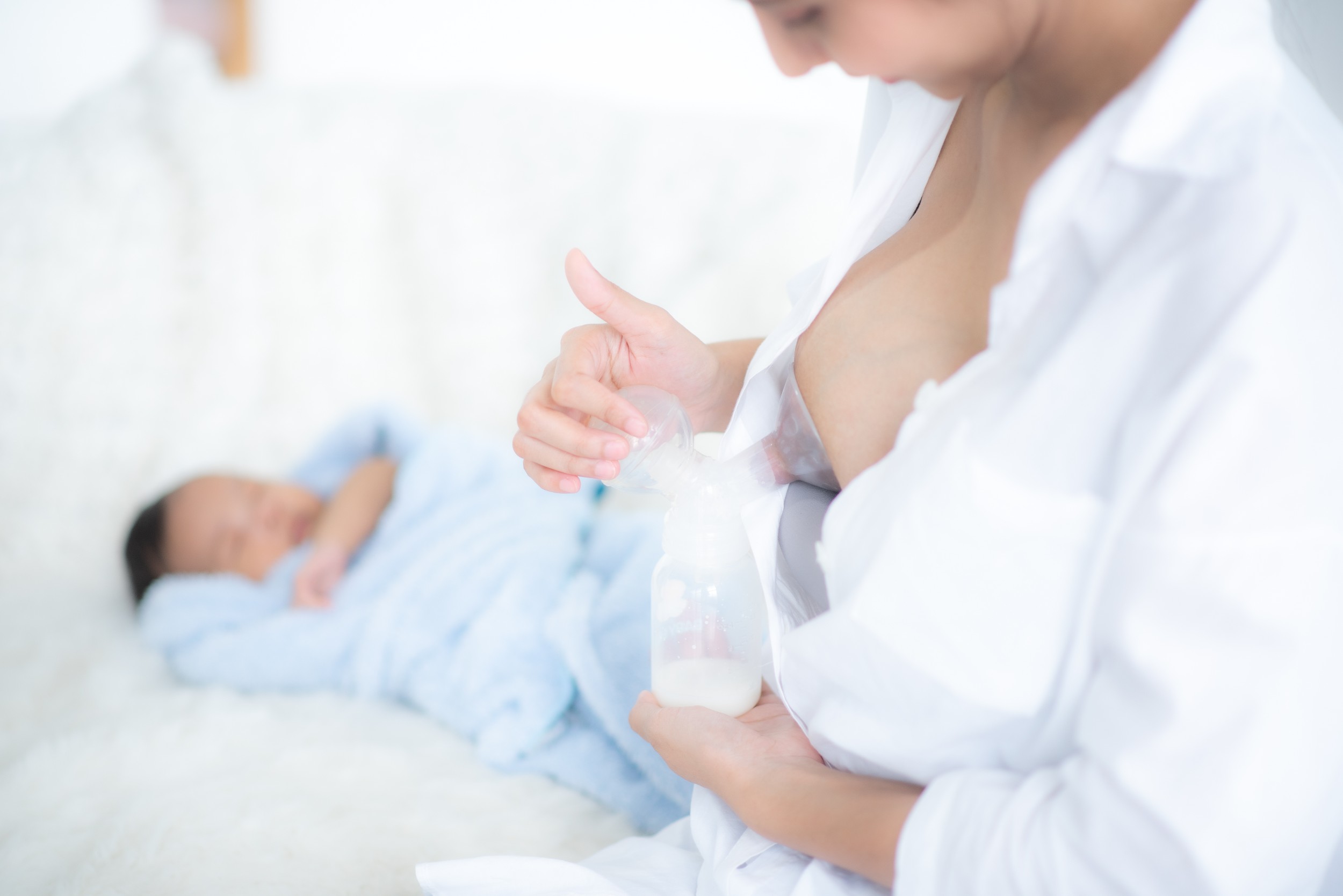
Hand expressing is best for collecting colostrum. You can hand express after baby is born too. It is helpful to tempt baby to feed or to manage common problems.
Before you start:
- Wash your hands with soap and warm water.
- Have something clean ready to collect the milk in.
Some find gently massaging their breasts before expressing helps their milk to let down.
Cup your breast with one hand then, with your other hand, form a "C" shape with your forefinger and thumb. Squeeze gently, keeping your finger and thumb a few centimetres away from your nipple, just outside the darker area around it (areola). Do not squeeze the nipple itself as you could make it sore. This should not hurt.
Release the pressure, then repeat, building up a rhythm. Try not to slide your fingers over the skin. Drops should start to appear, and then your milk usually starts to flow. If no drops appear, try moving your finger and thumb slightly, but still avoid squeezing the darker area near your nipple.
When the flow slows down, move your fingers round to a different section of your breast, and repeat. When the flow from one breast has slowed, swap to the other breast. Keep changing breasts until your milk drips very slowly or stops altogether.
There are 2 different types of breast pump: manual (hand-operated) and electric. Manual pumps are cheaper but may not be as quick as an electric pump. If you need a pump as part of a feeding plan, your community midwife can lend you one. If you choose to buy an electric pump, make sure it fits you. Find out more.
You can store breast milk in a sterilised container or in special breast milk storage bags:
- In the fridge for up to 8 days at 4oC or lower. If you're not sure of the temperature of your fridge, or it is higher than 4oC, use it within 3 days
- For 2 weeks in the ice compartment of a fridge
- For up to 6 months in a freezer, if it's -18oC or lower
Breast milk that's been cooled in the fridge can be carried in a cool bag with ice packs for up to 24 hours. Storing breast milk in small quantities will help avoid waste. If you're freezing it, make sure you label and date it first. Defrost your breast milk by putting it in the fridge. Once it is defrosted is must be used within 24 hours.